

On this page
- What is the blurting method?
- Blurting method explained in three steps
- How to use the blurting study method step by step
- Does the blurt study method actually work?
- When should you use the blurting technique?
- Which mistakes make blurting less effective?
- How to check your blurt against your notes
- Frequently asked questions
What is the blurting method?
The blurting method is a study technique in two halves. First you take a blank page, pick one topic, and write down every single thing you can remember about it without looking at anything. Definitions, dates, formulas, half sentences, arrows between ideas, whatever surfaces. Then you open your notes or textbook and go through them line by line, marking everything you left out or got wrong.
That second half is the whole point. The blurt itself is just a measurement. What makes the technique work is that it produces an honest, specific list of what is not in your head yet, on the same page as the proof.
It goes by a few names, blurting, brain dumping, or simply free recall, and the reason students like it is that it needs nothing: one blank page, one pen, one topic, and the willingness to sit with an uncomfortable silence for a minute while nothing comes to mind.
Write badly on purpose. A blurt is not a set of notes. Spelling, layout and full sentences all cost time you should be spending on recall. Fragments and arrows are fine.
Blurting method explained in three steps
Every good blurting session has the same shape. Skip the third stage and you have done a memory test with no follow-up, which feels productive and changes nothing.
Blurt from an empty page
Notes closed, phone away. Write everything you can retrieve on one topic until the page genuinely runs dry.
Check against the source
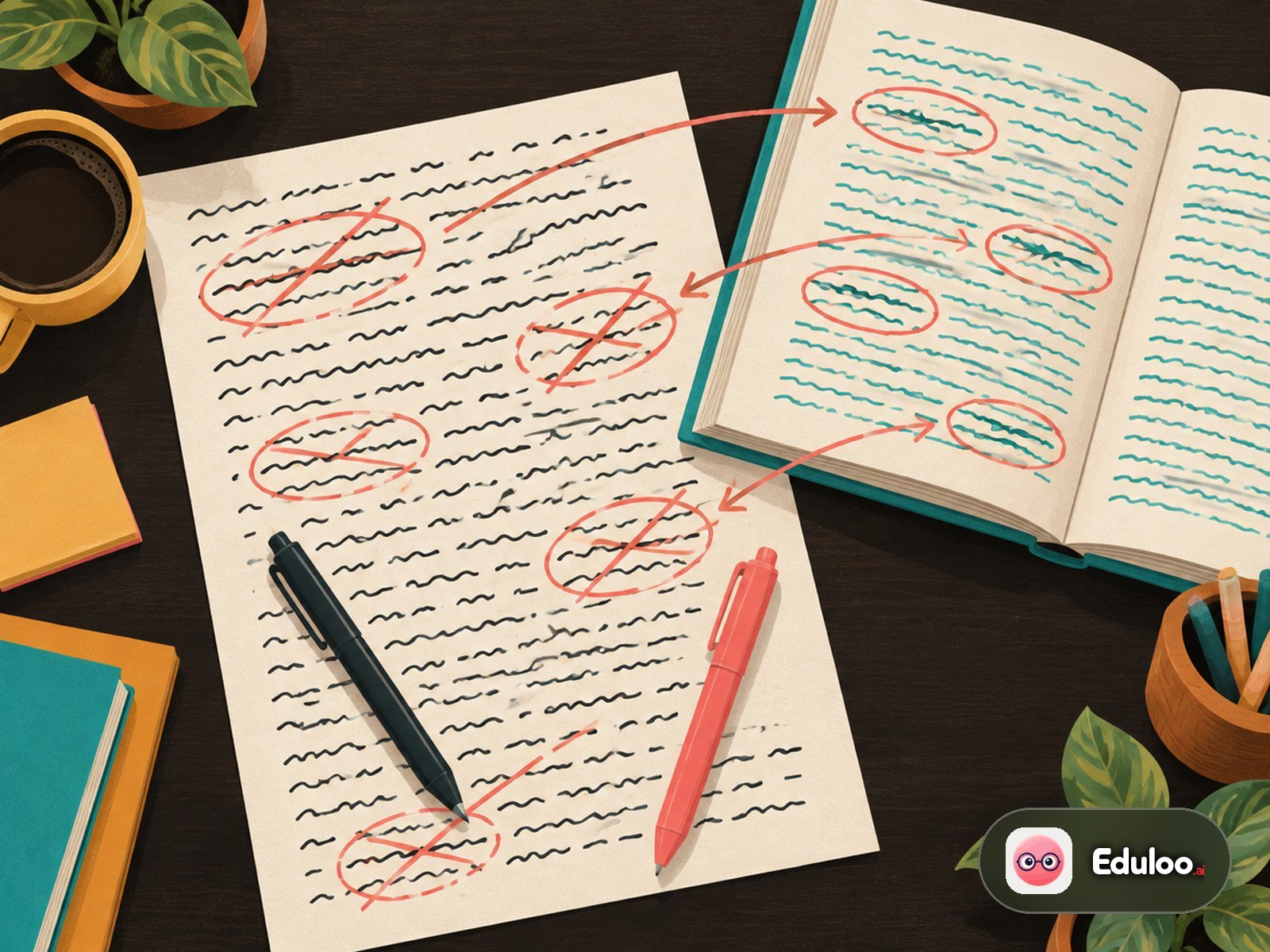
Open the notes in a different colour pen. Add what is missing, correct what is wrong, circle anything you only half knew.
Turn the gaps into practice
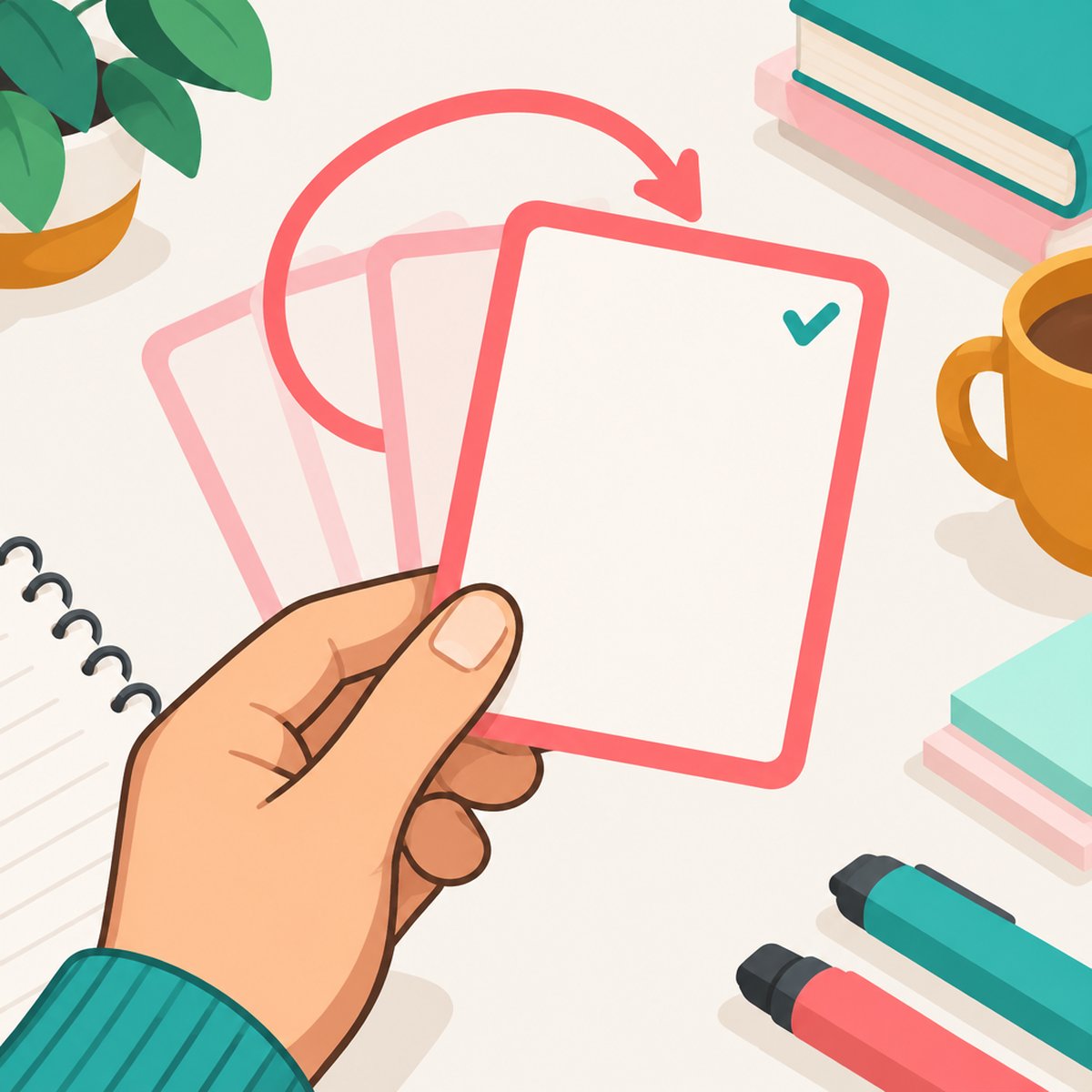
Everything in the second colour is your next study session: cards, questions, or a second blurt a few days later.
Why the blurt method beats rereading your notes
Rereading gives you a feeling of familiarity that is easy to mistake for knowledge. The words look known, so you assume you could produce them. A blank page removes that comfort instantly, because recognition is useless when there is nothing on the page to recognise.
This gap between feeling like you know something and being able to retrieve it has a name, and it is worth understanding before you plan a revision week: read our guide to the illusion of fluency for why highlighted pages lie to you.
How to use the blurting study method step by step
Here is a concrete run, using one biology topic as the example.
- Pick a topic small enough to finish. Not "the circulatory system", but "the cardiac cycle". A topic you can blurt in a few minutes is a topic you can check properly.
- Set a limit and start writing. Give yourself a fixed stretch of time and write without stopping to judge the output. Systole, diastole, valve names, pressure changes, the order of events, anything attached to the topic.
- Keep going past the first blank. The point where nothing comes is not the end of the blurt. Wait it out. The items retrieved after that pause are usually the shaky ones worth knowing about.
- Switch pen colour, then open the source. Work through your notes in order. Anything you missed gets added in the new colour. Anything you wrote wrong gets crossed out and corrected.
- Sort the second colour into two piles. Things you had never really learned, and things you knew but could not retrieve. The first needs teaching, the second needs practice.
- Schedule the repeat. Blurt the same topic again a few days later on a fresh page. The second blurt tells you whether the fix stuck.
If your material is a lecture PDF or a slide deck rather than handwritten notes, the checking stage is where it gets slow, and that is the part worth automating. More on that below.
Does the blurt study method actually work?
Blurting is a homemade version of something well studied. Writing down everything you remember about a topic without cues is what memory researchers call free recall, and pulling information out of memory rather than putting it back in is the core of the testing effect: the finding that being tested on material strengthens later memory of it more than spending the same time studying it again.
So the blurt study method is not a trick someone invented for social media. It is retrieval practice with a low barrier to entry. The Learning Scientists, a group of cognitive psychologists writing for students and teachers, collect the practical research on retrieval practice if you want the underlying evidence rather than the technique.
Two honest limits. Blurting tests recall, not understanding, so you can blurt a definition perfectly and still not be able to apply it. And an unchecked blurt can reinforce a mistake, because you have just practised retrieving the wrong answer. Both problems disappear if you never skip stage two.
When should you use the blurting technique?
The blurting technique fits material that has content to recall. It fits worse where the skill is a procedure you need to execute rather than facts you need to hold.
| Material | How to blurt it | What to check after |
|---|---|---|
| Biology, history, law, medicine | One topic per page, from memory | Missing terms, wrong sequences, missing causes |
| Vocabulary and languages | Blurt a word field, both directions | Words you only recognised, genders, irregular forms |
| Formulas and derivations | Write the formula, then what each symbol means | Conditions where the formula does not apply |
| Maths and problem solving | Blurt the method steps, then solve a real problem | Whether you can execute it, not just describe it |
| Essay subjects | Blurt arguments, evidence and counterpoints | Evidence you cannot attribute or date |
Timing matters too. Blurting on day one, right after a lecture, mostly measures your short term memory and flatters you. It is far more useful a few days later, when forgetting has had a chance to do its work and the blurt tells you something you did not already know.
Which mistakes make blurting less effective?
Most disappointing blurting sessions fail for one of five reasons.
- Peeking. One glance at the notes turns the whole exercise back into copying.
- Topics that are too big. "Everything about World War II" produces a page of headings and no detail worth checking.
- Stopping at the first blank. The pause is where the useful, effortful retrieval happens.
- Making it pretty. Time spent on layout is time not spent recalling.
- Never checking. A blurt with no comparison is a guess you have now written down.
Do not throw the page away. The marked-up blurt is the only record of what you did not know on that date. Keep it, and compare it with the next blurt on the same topic to see whether anything changed.
How to check your blurt against your notes
Stage two is where blurting dies for most people. Hunting through a 200 page PDF for the four things you forgot is slow enough that you skip it, and then the method stops working.
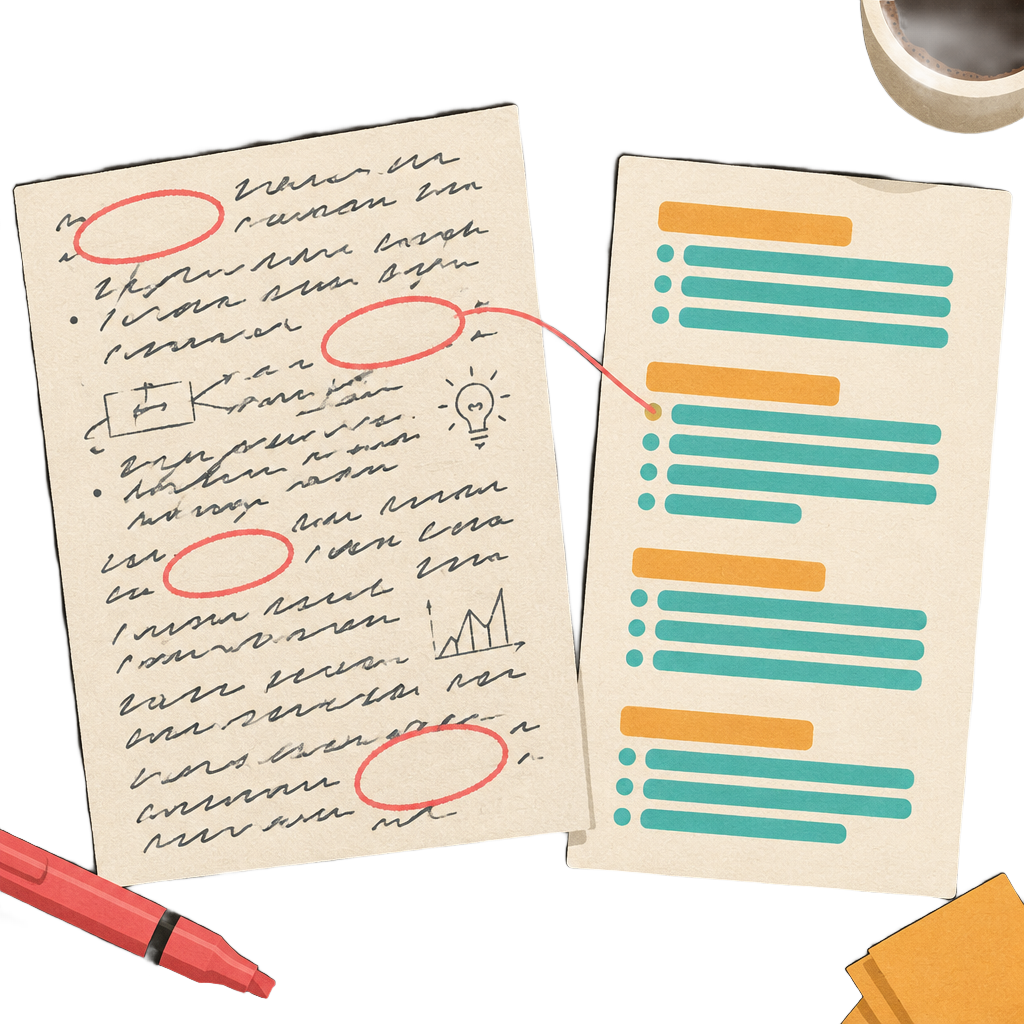
A structured recap of the source makes that check fast. With Eduloo summaries you upload the PDF, slides or Word file, tick the topics you blurted, and get back a summary that keeps the topic hierarchy of the original, so you can read down it in the same order you wrote and mark what is missing. Every topic links back to its section in your document library, so when something surprises you, you are one click from the source page. Photographed handwritten notes work as an upload too, since text recognition runs on image-only pages.
Then take the gaps somewhere useful. Flashcards built from the same topics give you spaced repetition on the exact items you missed, with the familiar Again, Hard, Good and Easy ratings so the shaky cards come back sooner. And a quiz on those topics is the harder version of the same check: fill-in-the-blank questions ask you to produce the answer rather than recognise it, which is what your blurt was already doing.
Quiz the gaps your blurt found10, 20 or 50 questions from the topics you missedThe workflow that holds together is short: blurt on paper, check against a summary, convert the second-colour items into cards or questions, blurt again in a few days. The paper stays where it belongs, at the start, where nothing can help you.
Stop hunting through the PDF for what you forgot
Upload the chapter, pick the topics you blurted, and check your page against a structured recap that links straight back to the source section.
Frequently asked questions
Short enough that you still have energy to check it. A few minutes of writing on one narrow topic, then roughly the same again comparing it against your notes. If the blurt takes half an hour, the topic was too wide, so split it and run two sessions instead.
They describe the same first step, emptying everything you remember onto a blank page. Brain dumping often stops there. Blurting treats that page as a draft to be marked up against the source, and the correction stage is what turns a memory test into actual studying.
Partly. Blurting works well for formulas, definitions, conditions and the steps of a method. It cannot tell you whether you can execute the method under exam pressure, so follow the blurt with real problems. Use it to audit what you know, then practise applying it.
Repeat it with a gap of a few days, then stretch the gap as recall gets easier. Blurting the same page twice in one afternoon mostly measures short term memory. The version a week later, on a fresh page, is the one that tells you what actually stuck.
Whichever gets you writing without editing. Paper makes arrows, diagrams and marking up in a second colour easy, which suits the checking stage. Typing is faster if your handwriting slows you down. What matters far more is that you never look at the source until you are finished.